USDR (Tangible)
A Polygon-based 'over-collateralized' stablecoin backed mostly by tokenized UK rental real estate that offered a 16% yield, then collapsed in a bank run when its thin liquid (DAI) reserves were drained.
▶ Run interactive simulation animated mechanism with editable parameters
How it works onchain
 Open full-size diagram
Summary
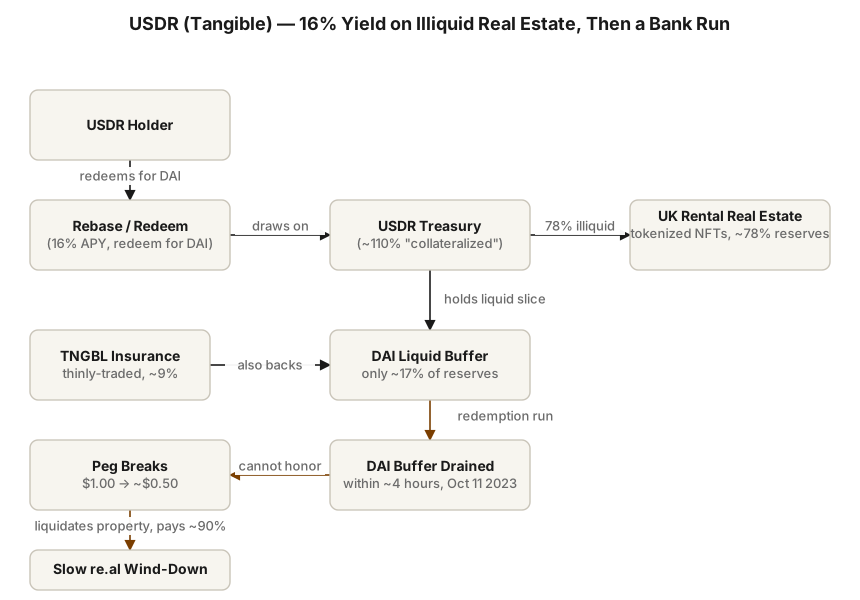
USDR (marketed as "Real USD") was a dollar-pegged stablecoin issued by Tangible, a Polygon-based protocol that tokenized real-world assets (RWAs), most notably rental real estate in the United Kingdom. Unlike crypto-collateralized stablecoins (DAI) or fiat-backed ones (USDC), USDR's backing was dominated by illiquid tokenized property: by the time of its collapse roughly 78% of reserves were UK real estate, with the remainder split between DAI, Tangible's own governance token TNGBL, and an "insurance fund" also mostly denominated in TNGBL. Holders were offered a headline 16% annual yield, paid via a rebasing mechanism, sourced from claimed rental income on the underlying properties. On October 11, 2023, a wave of redemptions drained the protocol's liquid DAI reserves within hours, the peg broke, and USDR fell to roughly $0.50. Tangible itself later described USDR as "a failed experiment," and subsequent reporting found that some properties backing USDR had been resold to Tangible at markups exceeding 20% on the same day of purchase, raising questions about whether the stated real estate collateral had been fairly valued.
Design (Mechanism)
USDR aimed to be an "over-collateralized," yield-bearing stablecoin whose collateral was real property rather than crypto or fiat reserves. The mechanism combined several pieces:
- Real estate backing: Tangible purchased UK rental properties, tokenized them as NFTs (via its broader "Tangible" RWA marketplace), and used them to back USDR issuance. At peak, real estate made up roughly 78% of stated reserves.
- Liquid buffer: A smaller slice of reserves (reported around 17%) was held in DAI, intended to serve as the liquid redemption layer so holders could exit for a stable asset without needing to sell property.
- TNGBL and insurance fund: Tangible's native governance token (TNGBL) backed a portion of reserves directly and an additional "insurance fund" (~9% of reserves), much of which was locked for roughly two years and itself thinly traded (sub-$5,000 order-book depth reported at the time of collapse).
- Yield/rebase: USDR balances rebased upward to distribute the claimed 16% APY, funded nominally by rental income from the underlying properties.
- Redemption: Users could redeem USDR for DAI from the liquid buffer. This is the leg that broke: the protocol's overall collateralization ratio was reported near 110%, but almost all of that cushion was illiquid real estate and thinly-traded TNGBL — not assets that could actually satisfy a redemption run.
Outcome
On October 11, 2023, redemptions accelerated and drained USDR's DAI reserves within about four hours, dropping the price from roughly $1.00 to about $0.50. With ~45 million USDR in circulation and only a few million dollars of genuinely liquid backing (an insurance fund cited around $6.2 million), the protocol could not honor redemptions at par. Tangible publicly conceded the design had failed and proposed a recovery plan, eventually offering holders a mix of DAI and TNGBL well below par (reports cited roughly 90 cents DAI plus 10 cents TNGBL per dollar in early proposals). By late 2024, Tangible had pivoted toward a "re.al" Layer-2 network for RWAs and ran a slow USDC-funded redemption program (opened publicly around September 30, 2024) using proceeds from liquidating real estate, targeting roughly $0.90 per USDR paid out over many epochs. Separately, later reporting found that some properties in the reserve had been bought and resold to Tangible the same day at markups sometimes exceeding 20%, raising questions about whether the value of the real estate backing USDR was fairly stated.
Why it worked
USDR briefly succeeded in attracting significant deposits (market cap approached $70 million before collapse) by combining an attention-grabbing 16% yield with the novel, tangible-sounding narrative of real-estate-backed stability, appealing to DeFi users seeking yield uncorrelated with crypto volatility. The RWA/real-estate-tokenization narrative was ahead of its time and drew genuine interest from the DeFi and RWA communities.
Why it failed or underperformed
The core design was structurally a bank-run waiting to happen: a stablecoin "over-collateralized" on paper (~110%) but backed overwhelmingly by illiquid assets (real property, locked/thinly-traded TNGBL) with only a thin sliver of genuinely liquid, redeemable collateral (DAI). Any real estate portfolio cannot be liquidated at treasury-book value on short notice, so once redemption demand exceeded the liquid DAI buffer, the peg had no real mechanism to hold. Compounding this, related-party property flips reportedly inflated the stated value of the real estate backing, meaning the collateral base may have been overstated even before the run began. Tangible itself acknowledged "too many attack vectors in the design."
Lessons
- A stablecoin's collateralization ratio is meaningless if the collateral mix is dominated by illiquid assets; what matters for peg stability is the ratio of liquid, readily redeemable reserves to outstanding, instantly-redeemable liabilities.
- Real-world asset tokenization does not by itself solve the liquidity mismatch between real estate (multi-week/month settlement) and on-chain redemptions (instant, 24/7); bridging that gap requires either large liquid buffers, redemption queues/gates, or accepting a non-par exit price during stress.
- Related-party transactions in RWA collateral valuation are a serious governance risk: without independent, verifiable appraisals and transparent ownership records, the stated backing of an asset-collateralized stablecoin can be manipulated or overstated, and holders have no easy way to audit it on-chain.
- Headline yields (here, 16% APY) sourced from claimed but unverified real-world cash flows (rental income) should be treated skeptically by depositors, since on-chain transparency does not extend to off-chain asset performance.
Redesign (EDITORIAL — hypothesis, not fact)
A more robust version of USDR's concept might separate the yield-bearing real-estate-backed instrument from the "stable, instantly redeemable" instrument entirely: issue a real-estate-backed yield token with an explicit redemption queue/notice period matching real property liquidation timelines (e.g., 30-90 days), rather than promising instant par redemption. A genuinely stable, instantly-liquid dollar token would then need to be backed almost entirely by liquid reserves (cash-equivalents or blue-chip crypto-collateral), with real estate exposure offered only as a separate, clearly-labeled higher-yield/higher-risk vault. Collateral valuations should be attested by independent third-party appraisers with on-chain proof-of-reserve style disclosure of each property's purchase price, seller identity, and appraisal history, specifically to prevent related-party markups. Finally, any claimed real-world yield (like rental income) should be verifiable via audited, periodic on-chain reporting rather than folded silently into a rebase mechanism that obscures its true source and risk.
Sources
- Real Estate-Backed Stablecoin USDR De-Pegs After Treasury Was Drained of Liquid Assets (news)
- USDR stablecoin backed by real estate collapses amid run on reserves (news)
- USDR Issuer to Salvage Failed Property-Backed Stablecoin's Assets, 'Make Users Whole' (news)
- Collapsed Real Estate-Backed Stablecoin Charts Path to Recovery (news)
- How a Crypto 'REIT' Misled Investors With Family Deals and 'Unjustified' Real-Estate Markups (news)
- USDR Redemptions: Launch Information — primary (project blog)
Related experiments
Last verified: 2026-07-27 · Spot an error? Suggest a correction